Our Service
For Restaurants and Commercial Kitchens
10+
Leading Brands
We’ve worked with
AI Innovation.
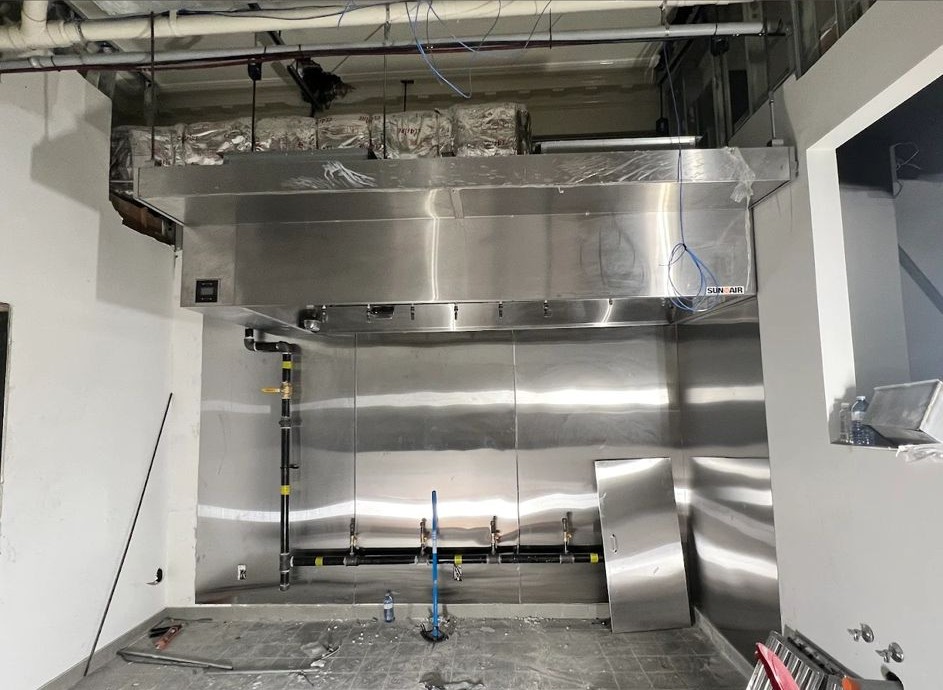
The Code-Required Standard for Kitchen Exhaust
Built for Demanding Environments
- High-Rise Office Buildings – Withstanding pressure differentials across multiple floors
- Upscale Retail – Premium construction matching premium spaces
- Mixed-Use Developments – Separating systems while maintaining acoustic control
- Historic Renovations – Modern performance in buildings requiring permanent solutions
Why Codes Require Welded Construction?
- Grease Fire Containment
Welded seams prevent grease-laden air from escaping into building cavities. If a duct fire occurs, continuous welds contain flames within the ductwork system. - Zero Leakage Tolerance
Kitchen exhaust can’t leak. Period. Welded construction eliminates every potential escape point that screws, rivets, or slip joints would create. - Structural Integrity Under Heat
Exhaust temperatures can spike during cooking operations. Welded 16-gauge construction maintains integrity when lighter materials would fail. - Long-Term Grease Exposure
Grease accumulation stresses duct seams over time. Welded joints don’t loosen, separate, or deteriorate like mechanical fasteners.
Welding Quality Standards
Continuous Seams – No skip welding or spot welds—complete penetration throughout. Smooth Interior Finish – Minimizing grease accumulation points inside ductwork. Clean Exterior Appearance – Professional welds that pass inspector scrutiny. Leak-Proof Connections – Every joint sealed completely against air and grease escape
Material Specifications
Commercial-Grade Steel – 16-gauge thickness throughout, no lighter sections. Galvanized or Black Iron – Material selection based on application and code requirements. Stainless Options – When corrosion resistance or premium appearance matters
Where we are essential
Installation Considerations
Welded kitchen exhaust ductwork requires specialized skills and equipment. Our fabrication team has the expertise to build code-compliant systems that inspectors approve and that perform reliably year after year.
Heavy-Duty Hanger Systems
Supporting substantial weight of welded steel construction
Field Welding Capabilities
On-site welding for final connections and modifications
Rated Penetrations
Maintaining building protection where ducts pass through walls
Expansion Joint Provisions
Accommodating thermal movement in long runs